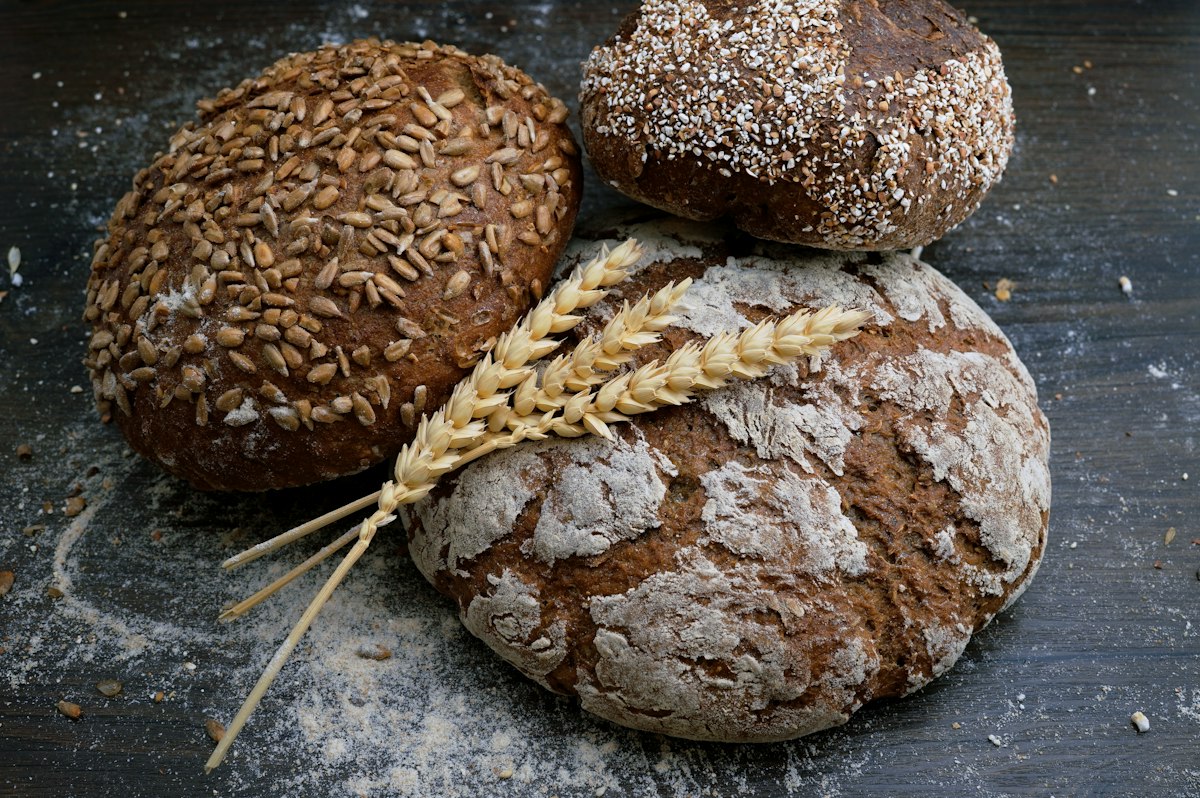
For thousands of years, bread has been called "the staff of life"—a fundamental sustenance that has nourished civilizations. Yet in our modern era of industrial production and instant gratification, the ancient art of true artisan bread-making is more precious than ever.
When I open our bakery before dawn each morning, I'm participating in a ritual that connects me to countless generations of bakers. The same basic process—mixing flour, water, and salt, allowing time for fermentation, and baking in a hot oven—has been repeated for millennia. But it's the details, the patience, and the respect for tradition that transform these simple ingredients into something extraordinary.
The Foundation: Natural Fermentation
At the heart of authentic artisan bread is natural fermentation. Unlike commercial bread that relies on commercial yeast for quick rising, traditional sourdough uses wild yeast and beneficial bacteria captured from the environment. These microorganisms live in a "starter"—a living culture of flour and water that must be fed and maintained.
Our oldest starter at Lake Champlain Bakery is over 5 years old. We feed it daily, and in return, it gives us bread with complex flavors that cannot be replicated by commercial yeast alone. The fermentation process takes 24-48 hours, during which the dough develops its characteristic tangy flavor, open crumb structure, and superior digestibility.
Why Natural Fermentation Matters
The long, slow fermentation isn't just about flavor—it's about nutrition and health. During fermentation:
- Gluten proteins are partially broken down, making the bread easier to digest for many people with gluten sensitivity (though not safe for those with celiac disease)
- Phytic acid is reduced, allowing your body to better absorb minerals like iron, zinc, and magnesium
- Beneficial bacteria develop, contributing to gut health
- Complex flavors emerge, from sweet to tangy to nutty notes
- The bread stays fresh longer, with natural preservative qualities
Hand-Shaping: The Artisan's Touch
After fermentation comes shaping—a skill that takes years to master. Each loaf is gently handled to preserve the gas bubbles created during fermentation, then shaped into its final form. The way a baker handles the dough, the tension created on the surface, the pattern scored into the top—these details determine the final appearance and texture of the bread.
There's something deeply satisfying about shaping bread by hand. You can feel the dough's readiness, its elasticity, its life. No machine can replicate this intuitive understanding. It's a conversation between baker and dough, honed through experience and guided by tradition.
The Stone Oven: Ancient Technology Still Unmatched
Our stone ovens are imported from Italy and built using principles that haven't changed in centuries. Stone retains and radiates heat evenly, creating the ideal environment for baking bread. The thermal mass of the stone ensures consistent temperature, while steam injection creates the perfect crust—crispy and golden on the outside, soft and airy on the inside.
When bread enters our 250°C (480°F) oven, several transformations occur simultaneously:
- "Oven spring" causes the loaf to rise dramatically in the first few minutes
- The Maillard reaction creates the golden-brown color and complex flavors in the crust
- Caramelization of sugars adds sweetness and depth
- Steam keeps the crust flexible initially, then evaporates to create crispness
The Modern Relevance of Ancient Techniques
You might wonder: why go through all this trouble? Why not use modern shortcuts and industrial methods?
The answer is simple: because shortcuts sacrifice quality. Industrial bread is made in hours using chemical additives, artificial enzymes, and excessive commercial yeast. The result is a product that tastes flat, goes stale quickly, and offers minimal nutritional value beyond empty calories.
Traditional artisan bread, on the other hand, is alive with flavor, packed with nutrients, and connects us to our culinary heritage. Each loaf tells a story—of the grain grown by local farmers, the wild yeast captured from our bakery's air, the baker's skill developed over years of practice, and the ancient techniques preserved through generations.
What You Can Do at Home
You don't need a professional bakery to make artisan bread. Here are my recommendations for home bakers:
- Start a sourdough starter: Mix equal parts flour and water, feed daily, and in a week you'll have a living culture ready to bake with
- Be patient: Allow 24-48 hours for fermentation—resist the urge to rush
- Use quality flour: Organic, stone-ground flour makes a noticeable difference
- Invest in a Dutch oven: This creates a mini steam oven in your home kitchen
- Practice: Bread-making is a skill that improves with repetition
Preserving Tradition for Future Generations
At Lake Champlain Bakery, we see ourselves as custodians of an ancient craft. Every loaf we bake is a small act of resistance against the industrialization of food. We're not just making bread—we're preserving knowledge, supporting sustainable agriculture, and providing our community with real, nourishing food.
The traditions of artisan bread-making have survived for thousands of years because they work. They produce superior bread, they honor the ingredients, and they connect us to something larger than ourselves. In our fast-paced modern world, taking the time to make bread properly is a revolutionary act.
When you taste a slice of true artisan sourdough—with its crackling crust, complex flavor, and perfect chew—you're not just eating bread. You're experiencing history, craftsmanship, and tradition in every bite.
Experience Authentic Artisan Bread
Visit Lake Champlain Bakery to taste the difference that traditional methods make.
Visit Us