A custom cake is more than just dessert—it's the centerpiece of your celebration, a work of edible art, and a memory that will be captured in countless photographs. As Lake Champlain Bakery's cake designer, I've had the privilege of bringing hundreds of visions to life, and today I want to share the magic behind the process.
Whether you're planning a wedding, birthday, anniversary, or corporate event, understanding how custom cakes are created will help you collaborate more effectively with your baker and ensure you get exactly what you've dreamed of.
Step 1: The Initial Consultation
Everything begins with a conversation. When you first contact us, we schedule a consultation—either in person at our bakery or via video call. This is where the magic starts, and it's the most important part of the entire process.
During the consultation, I ask questions like:
- What's the occasion? A wedding requires elegance and sophistication, while a child's birthday allows for playful creativity
- What's your style? Modern and minimalist? Romantic and vintage? Bold and colorful?
- What's your color palette? This helps the cake coordinate with your event's overall design
- Do you have inspiration photos? Pinterest boards and Instagram saves are incredibly helpful
- How many guests? This determines the size and structure of the cake
- What are your flavor preferences? Chocolate lover? Fruit enthusiast? Prefer classic vanilla?
- Any dietary requirements? Gluten-free, vegan, nut-free—we can accommodate
I also show you examples of past work, discuss what's possible (and what's not), and explain the technical aspects that affect design choices. For instance, a cake destined for an outdoor summer wedding needs different structural considerations than one served indoors.
Step 2: The Design Proposal
After our consultation, I create a detailed design proposal. This includes:
- Sketches or digital mockups showing what your cake will look like
- Detailed description of tiers, flavors, fillings, and frostings
- Decoration elements like fresh flowers, sugar flowers, fondant details, or piping work
- Color swatches to ensure colors match your vision
- Pricing breakdown based on size, complexity, and materials
- Timeline confirming delivery date and setup details
This proposal is our shared vision document. We revise it together until you're completely satisfied. I encourage clients to be honest and specific—this is your cake, and I want you to love every detail.
Step 3: Flavor Selection & Testing
Now comes everyone's favorite part—tasting! We offer a selection of our most popular combinations:
- Classic Vanilla: Madagascar vanilla cake with vanilla Swiss meringue buttercream
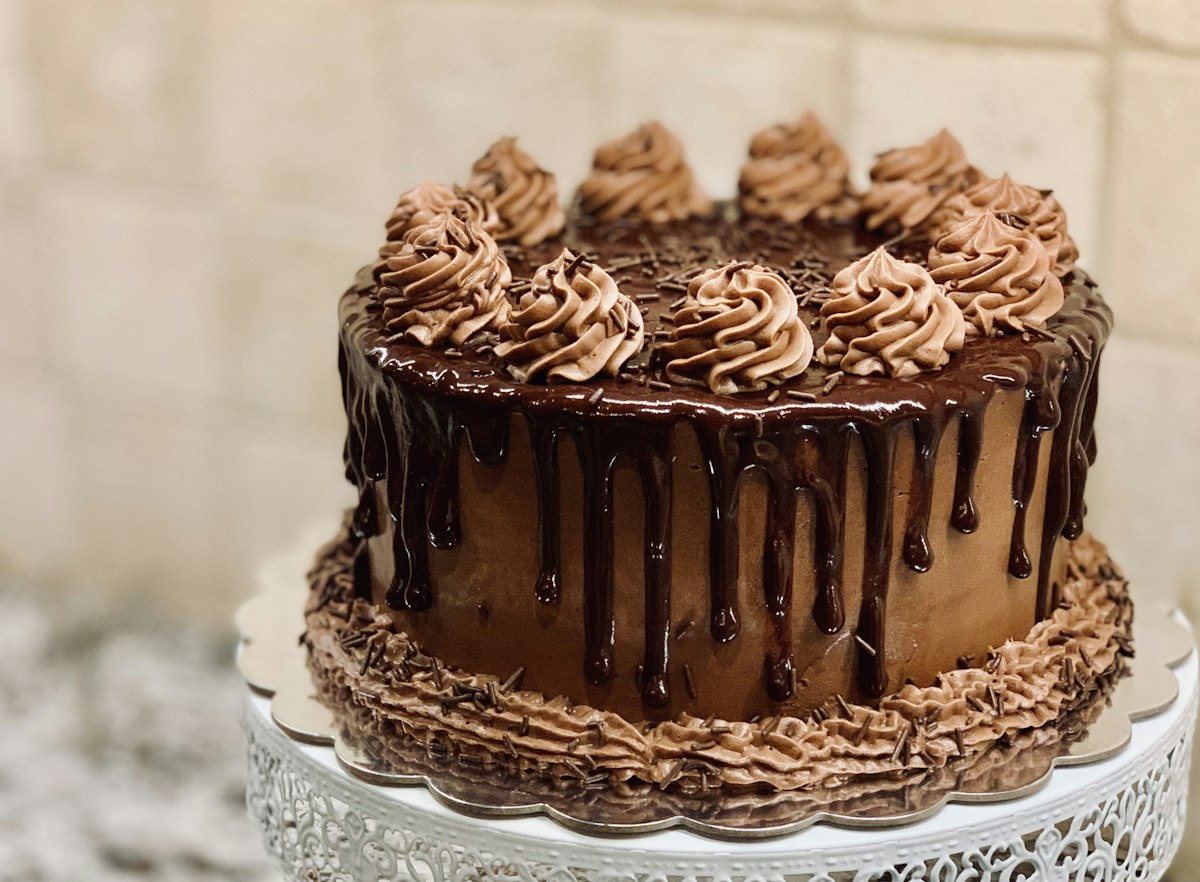
- Chocolate Decadence: Rich chocolate cake with chocolate ganache
- Red Velvet: Traditional red velvet with cream cheese frosting
- Lemon Raspberry: Light lemon cake with fresh raspberry filling and lemon buttercream
- Caramel: Vanilla cake with salted caramel filling and caramel buttercream
- Tiramisu: Coffee-soaked layers with mascarpone cream
You can also mix and match—different tiers can feature different flavors, perfect for pleasing diverse palates at your event.
Pro tip: Consider the season. Light, fruity flavors shine in summer, while rich, spiced flavors are perfect for fall and winter celebrations.
Step 4: The Baking Process
Once the design is approved and deposit is received, I add your cake to our production schedule. For wedding cakes and elaborate designs, we typically need 2-3 weeks' notice. Here's what happens behind the scenes:
Days Before Your Event:
3-4 days out: I create any sugar flowers, fondant decorations, or chocolate elements. These need time to dry and set properly.
2 days out: Our bakers prepare the cake layers. Each tier is baked, cooled, wrapped, and refrigerated to ensure maximum freshness.
1 day out: Assembly day! This is when the magic really happens. I level each cake layer, add fillings, apply crumb coat (a thin layer of frosting that seals in crumbs), and refrigerate overnight.
Event day: Final frosting, decoration, and assembly. For multi-tiered cakes, this can take 6-8 hours. Internal supports, dowels, and sometimes even engineering are involved to ensure your cake is structurally sound and safe.
Step 5: Decoration Techniques
The decoration technique dramatically affects your cake's final look. Here are the most popular options:
Buttercream Finishes:
- Smooth: Clean, modern look perfect for metallic accents or minimal design
- Textured: Rustic, homey feel with visible spatula marks
- Piped: Rosettes, ruffles, or other decorative piping patterns
- Ombré: Gradual color transition from dark to light
Fondant Work:
Fondant creates a smooth, polished finish and allows for intricate details like ribbons, bows, and 3D elements. However, many people prefer the taste of buttercream, so I often use fondant for decorative elements on a buttercream base.
Fresh Flowers:
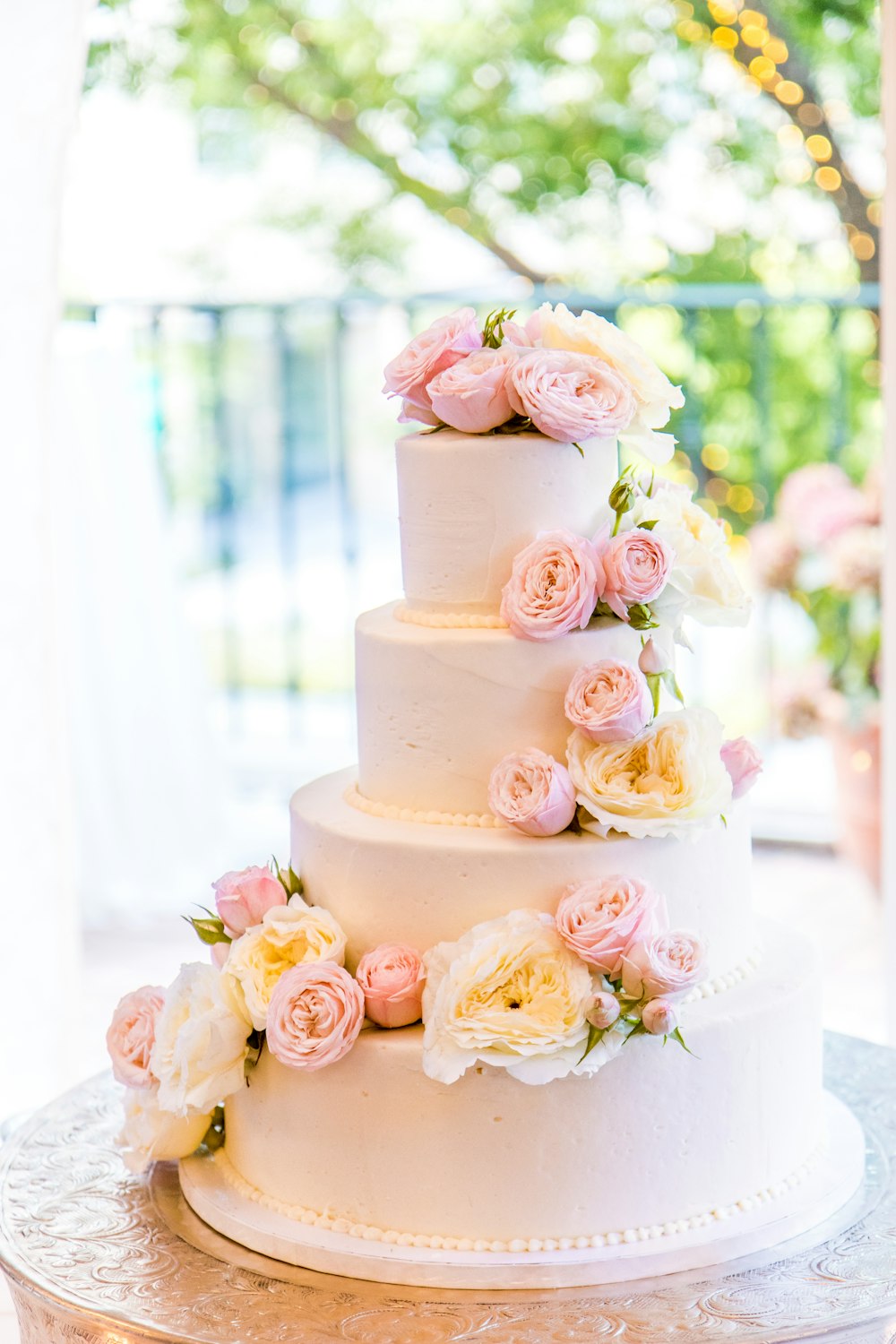
Real flowers add natural beauty and elegance. I work with local florists to ensure flowers are pesticide-free and food-safe. Fresh flowers must be added shortly before the event to maintain their beauty.
Special Effects:
- Gold or silver leaf: Luxurious metallic accents
- Drip design: Chocolate or colored ganache dripping down the sides
- Watercolor painting: Artistic, one-of-a-kind designs painted directly on fondant
- Geode effect: Rock candy crystals creating dramatic "geode" openings
Common Design Challenges & Solutions
Over the years, I've encountered and solved countless design challenges. Here are a few:
Challenge: Outdoor summer wedding in hot weather
Solution: Use Swiss meringue buttercream (more heat-stable than American buttercream), create structure with internal supports, deliver as late as possible, and advise on proper storage until serving.
Challenge: Client wants a gravity-defying design they saw on Instagram
Solution: Explain the physics involved, demonstrate with photos of similar cakes I've created, and work together to achieve the desired effect while ensuring safety and stability.
Challenge: Budget constraints with elaborate vision
Solution: Prioritize elements that matter most to the client. Perhaps reduce the number of tiers and supplement with sheet cakes in the kitchen, or simplify decoration while keeping the wow-factor.
Tips for Clients: How to Get Your Perfect Cake
- Book early: Popular dates fill up quickly, especially wedding season (May-September)
- Be specific but flexible: Clear vision is great, but trust your designer's expertise
- Consider your venue: Share photos of your event space to ensure the cake fits aesthetically and logistically
- Think about cake cutting: When will you cut it? Who will handle it? Coordinate these details
- Save a tier: Traditional for weddings—we can pack the top tier for your first anniversary
- Communicate dietary needs clearly: The earlier we know, the better we can accommodate
- Trust the process: Your cake will be beautiful, delicious, and exactly what you envisioned
The Final Reveal
There's a moment at every event—whether it's the grand reveal at a wedding reception or the birthday surprise—when everyone sees the cake for the first time. The gasps, smiles, and tears of joy never get old. This is why I do what I do.
A custom cake is the culmination of creativity, skill, collaboration, and love. It represents not just dessert, but a centerpiece of celebration, a focal point of photographs, and a sweet memory that lingers long after the last bite.
Ready to Design Your Dream Cake?
Schedule a consultation with our cake designer to bring your vision to life.
Book Consultation